
Contents
Overview
Sparta, known in antiquity as Lacedaemon, was a preeminent city-state in Laconia, ancient Greece. Emerging around 650 BC, it rapidly ascended to become the dominant land military power in the Hellenic world, a position it fiercely defended until its pivotal defeat in 371 BC. During the Greco-Persian Wars, Sparta, alongside its naval rival Athens, formed the backbone of the Greek defense, with Spartan forces proving decisive at battles like Thermopylae and Plataea. The city-state's military prowess culminated in its leadership of the Peloponnesian League against Athens, a conflict it ultimately won, ushering in a brief but potent period of Spartan hegemony. Its unique social and political structure, centered on rigorous military training and austere living, left an indelible mark on Western civilization, shaping concepts of discipline, duty, and statecraft.
🎵 Origins & Ancient Roots
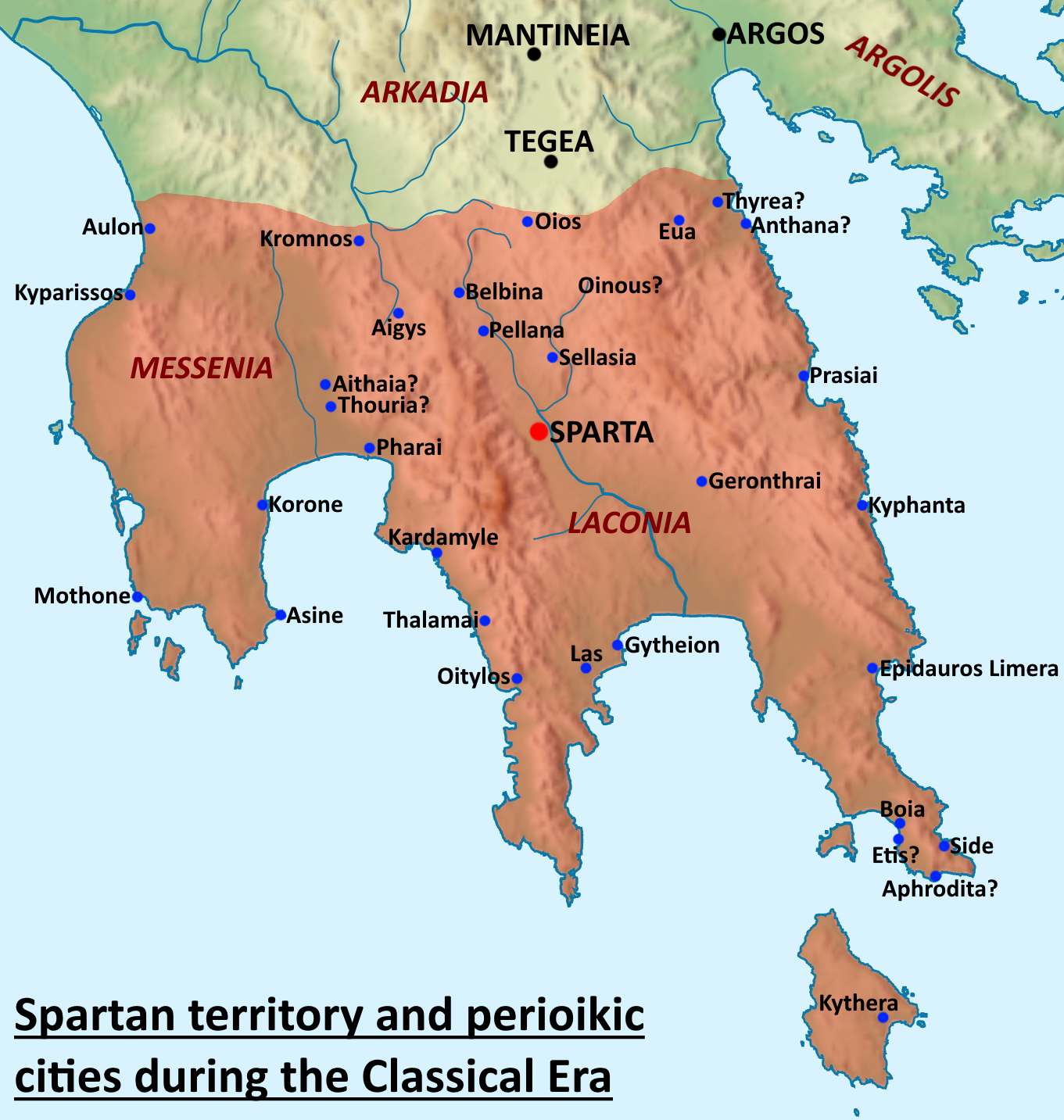
Sparta's capital city developed from a cluster of villages in the fertile Eurotas River valley of Laconia. Known as Lacedaemon in its early days, the city-state's distinct identity began to coalesce around the 8th century BC. The legendary reforms attributed to Lycurgus, though debated by historians like Herodotus and Thucydides, are widely credited with establishing the rigid social and military framework that defined Sparta. This period saw the subjugation of the indigenous population, the Perioikoi, and the enslavement of the Helots, who formed the agricultural backbone of the state and whose constant threat of revolt necessitated Sparta's militaristic society. The transformation into a formidable military power was solidified by the 7th century BC, setting the stage for its future dominance.
⚙️ The Spartan System: Agoge and Homoioi
Sparta's society was a meticulously engineered machine designed for military supremacy. At its core were the Homoioi, or 'Equals,' the full Spartan citizens who dedicated their lives to the state. From the age of seven, boys entered the Agoge, a brutal state-sponsored education and training regimen that stripped away individuality in favor of discipline, obedience, and martial skill. Women, while not citizens, enjoyed more freedom and responsibility than their counterparts in other Greek city-states, managing estates and maintaining physical fitness to bear strong children. The Perioikoi, free non-citizens, handled trade and crafts, while the Helots, a state-owned serf population, performed all manual labor, living under constant threat of the Krypteia, a secret police force tasked with maintaining control through terror.
📊 Military Might and Key Conflicts
Sparta's military might was legendary, built upon a disciplined infantry phalanx that was virtually unmatched on land for centuries. Their strategic brilliance and unwavering resolve were tested and proven during the Greco-Persian Wars (499-449 BC). The iconic stand of King Leonidas I and his 300 Spartans at the Battle of Thermopylae in 480 BC, though a tactical defeat, became a powerful symbol of defiance against the Persian Empire. Later, under the command of Pausanias, Spartan forces played a crucial role in the decisive victory at the Battle of Plataea in 479 BC. This era cemented Sparta's reputation as the preeminent land power in Greece, a status it would defend fiercely, most notably in the Peloponnesian War.
🌍 Influence and Legacy
Sparta's influence extended far beyond its military victories. Its unique political system, emphasizing austerity, discipline, and civic duty, became a model and a point of fascination for later thinkers, including Plato and Xenophon. The concept of the 'Spartan ideal' – a life of rigorous training, self-denial, and unwavering loyalty to the state – resonated through Roman society and continues to echo in Western culture, influencing military academies, educational philosophies, and even popular depictions in film and literature. The Spartan emphasis on laconic speech, characterized by brevity and wit, also left a linguistic legacy.
⚡ Decline and Roman Era
Despite its formidable military, Sparta's dominance proved unsustainable. The costly victory in the Peloponnesian War against Athens left Sparta exhausted, and its brief hegemony was challenged by other Greek states. The decisive defeat at the Battle of Leuctra in 371 BC by the Theban general Epaminondas shattered Sparta's military supremacy and marked the end of its era as a major power. While Sparta continued to exist as a city-state, it never regained its former influence. Under Roman rule from the 2nd century BC, Sparta became a tourist attraction for Romans interested in its ancient customs, though its political and military power had long since evaporated.
🤔 The Spartan Myth vs. Reality
The popular image of Sparta, often portrayed as a monolithic, hyper-militaristic society devoid of culture or intellectualism, is a simplification. While military training was paramount, evidence suggests Spartans engaged in poetry, music, and philosophical discourse, albeit with a distinctively austere flavor. The legend of the 'Spartan ideal' was often constructed by outsiders, particularly Athenians, who both admired and feared Sparta's discipline. The reality was a complex society grappling with internal tensions, particularly the ever-present threat of Helot revolt, which heavily influenced its political and social structures. The notion of Spartan women being solely focused on breeding is also a mischaracterization; they held significant economic power and social standing relative to women elsewhere in Greece.
🔮 Enduring Fascination
Sparta's enduring appeal lies in its stark contrast to modern societies and its embodiment of extreme ideals. The disciplined warrior ethos, the unwavering commitment to the state, and the stark simplicity of Spartan life continue to captivate the imagination. From Hollywood blockbusters like '300' to academic studies of ancient governance, Sparta remains a potent symbol of martial prowess and societal control. Its story serves as a perpetual case study in the rise and fall of empires, the costs of militarism, and the complex interplay between individual sacrifice and collective identity. The question of whether its rigid system was a triumph of order or a tragic suppression of human potential remains a subject of ongoing debate.
💡 Spartan Education and Training
The Spartan educational system, the Agoge, was central to its success and its unique character. Boys were removed from their families at age seven and placed in barracks, where they endured harsh physical training, learned to read and write minimally, and were encouraged to steal food to develop cunning and resourcefulness, though punishment was severe if caught. Music and dance were also part of the curriculum, often performed in a martial style. Girls, while not part of the Agoge, received rigorous physical training and education focused on managing households and bearing healthy children. This system, unique in the ancient world, produced highly disciplined and loyal citizens, but at the cost of individual development and intellectual breadth.
📚 Further Exploration
For those fascinated by the Spartan model, further study into the writings of ancient historians like Thucydides, Xenophon, and Plutarch is essential. Examining the archaeological evidence from the site of ancient Sparta, particularly the remains of the Acropolis and the Sanctuary of Artemis Orthia, provides tangible insights. Comparative studies with other Greek city-states, such as Athens and Thebes, highlight Sparta's distinctiveness. Exploring modern interpretations, from historical fiction to academic analyses of ancient military strategy and social engineering, offers a contemporary perspective on this enduringly compelling civilization.
Key Facts
- Category
- history
- Type
- place