
Contents
Overview
The Fields Medal traces its roots to the 1924 International Congress of Mathematicians (ICM) in Toronto, organized by Canadian mathematician John Charles Fields (1863–1932), a professor at the University of Toronto. Surplus funds from the event, totaling $2,700 after printing proceedings, led to a committee decision to allocate $2,500 for two medals to honor future ICM outstanding achievements. Fields later endowed the prize from his estate, though contrary to his wishes, it was named the Fields Medal in his honor; the first awards went to Lars Ahlfors and Jesse Douglas in 1936, with regular quadrennial presentations starting in 1950.[1][3][4]
⚙️ How It Works
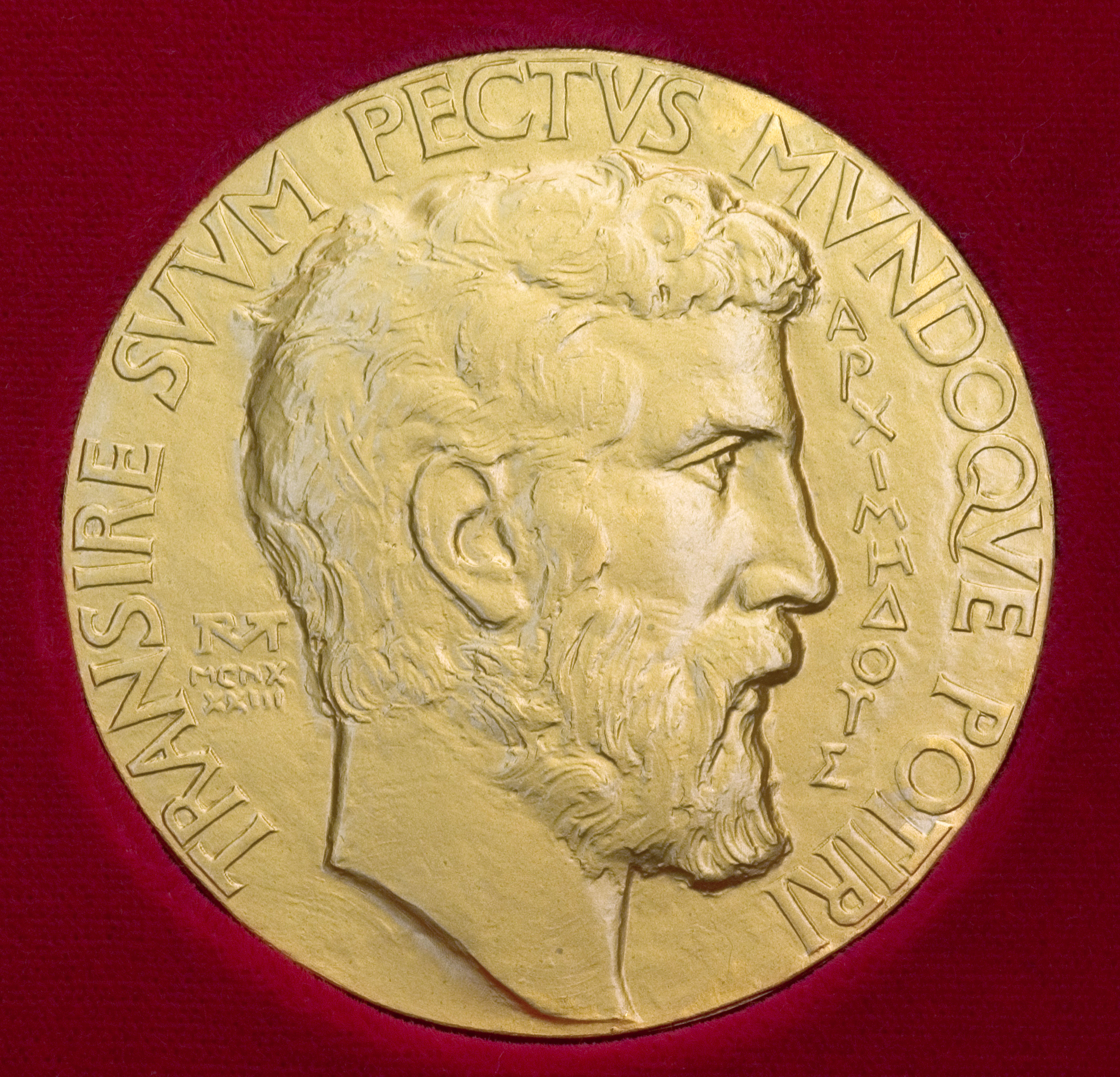
Awarded by the International Mathematical Union (IMU) every four years at the ICM, the Fields Medal goes to two to four mathematicians under 40 years old on January 1 of the award year, recognizing exceptional past work and future potential. A secretive Fields Medal Committee, selected by the IMU Executive and chaired by a public figure like the IMU President, reviews confidential nominations without informing candidates. The gold medal, 63.5 mm in diameter and weighing 169 grams (valued at about 5,500 CAD), features Archimedes' sphere-in-cylinder on the reverse with the Latin inscription 'Congregati ex toto orbe mathematici ob scripta insignia tribuere,' meaning mathematicians worldwide award it for outstanding writings; winners also receive 15,000 CAD.[1][2][3][4]
🏆 Notable Winners
Iconic recipients include 1954's youngest winner Jean-Pierre Serre (age 28) for homotopy groups and sheaf theory, 2014's trailblazing first woman Maryam Mirzakhani for dynamical systems on moduli spaces, and 2022's quartet: Maryna Viazovska (sphere packing), Hugo Duminil-Copin (statistical physics), June Huh (combinatorics), and James Maynard (number theory). Winners often hail from abstract fields like algebraic geometry (preponderant) and topology, with rare physicists like Edward Witten (1990) among PhD mathematicians. The prize reflects mathematical diversity, spotlighting emerging areas from ergodic theory to partial differential equations.[1][2][3][6]
🌍 Cultural Impact
Dubbed the 'Nobel Prize of Mathematics,' the Fields Medal elevates winners to global stardom, influencing research funding, academic appointments, and public perception of math as a vibrant frontier. It highlights underrepresented voices, like the two women winners amid male dominance, and underscores pure math's triumphs over applied fields like statistics. Culturally, it inspires via IMU congresses, media buzz (e.g., 2022's Ukrainian hero Viazovska), and ties to broader science narratives, akin to Albert Einstein's relativity impact.
🔮 Legacy & Future
As math evolves with Artificial Intelligence and Quantum Computing, the Fields Medal's youth focus ensures it pioneers integrative breakthroughs across disciplines. Debates persist on its age limit stifling late bloomers and underrepresentation of statistics or applied math. Future ICMs promise to honor diverse global talent, solidifying its role as math's eternal beacon for 'passing beyond understanding.'[1][3][6]
Key Facts
- Year
- 1936–present (every 4 years)
- Origin
- Toronto, Canada
- Category
- science
- Type
- award
Frequently Asked Questions
Who can win the Fields Medal?
Mathematicians under 40 on January 1 of the award year, selected for outstanding achievements and future promise across diverse fields like algebraic geometry and number theory.[1][3]
How often is it awarded?
Every four years at the International Congress of Mathematicians (ICM), with 2-4 recipients preferred to represent math's breadth.[1][4]
What does the medal look like?
A 14-karat gold, 63.5mm diameter, 169g medal with Archimedes' sphere-in-cylinder and Latin inscriptions honoring global mathematicians' recognition of outstanding work.[2][3]
Why is it called the 'Nobel of Math'?
Like the Nobel, it's the top math honor per surveys, but quadrennial with a youth focus, celebrating emerging leaders unlike lifetime Nobels.[3]
Who are some famous winners?
Jean-Pierre Serre (1954, youngest at 28), Maryam Mirzakhani (2014, first woman), Maryna Viazovska (2022, second woman), and Edward Witten (1990, physicist).[2][3][6]
References
- britannica.com — /science/Fields-Medal
- youtube.com — /watch
- en.wikipedia.org — /wiki/Fields_Medal
- mathunion.org — /imu-awards/fields-medal
- washington.edu — /research/or/honors-and-awards/fields-medal/
- newsroom.hlf-foundation.org — /blog/article/the-fields-medal-in-statistics/
- mathworld.wolfram.com — /FieldsMedal.html