
Contents
Overview
The concept of capturing three-dimensional information has roots stretching back to the early 20th century, with significant advancements in the 1990s revolutionizing medical diagnosis and treatment. Early developments in medical imaging, such as CT and MRI, laid the groundwork for reconstructing volumetric data. Techniques like photogrammetry, which converts overlapping photographs into 3D models, have a history dating back to the 19th century, as noted by Albrecht Dürer's work on perspective. The evolution from 2D imaging, which provides flat, linear views, to 3D imaging, which adds depth and a comprehensive representation of length, width, and height, has been a gradual but transformative process, impacting fields from dentistry to industrial automation. The development of technologies like ChatGPT and advanced algorithms has further accelerated the capabilities in processing and interpreting 3D data.
⚙️ How It Works
At its core, 3D imaging involves measuring the distance between a sensor and points in an environment, generating data in formats like point clouds, depth maps, or volumetric datasets. Key technologies include Stereo Vision, which mimics human binocular vision using two cameras; Structured Light, which projects patterns onto surfaces to analyze their deformation; Time-of-Flight (ToF), which measures the time light takes to travel to an object and back; and Laser Triangulation, which uses a laser line and camera to capture profiles. LiDAR (Light Detection and Ranging) is another prominent technique, widely used for creating accurate 3D maps. These methods are essential for machine vision systems, enabling devices to perceive and interact with the physical world, much like how Albert Einstein's theories revolutionized our understanding of space and time.
🌍 Applications & Impact
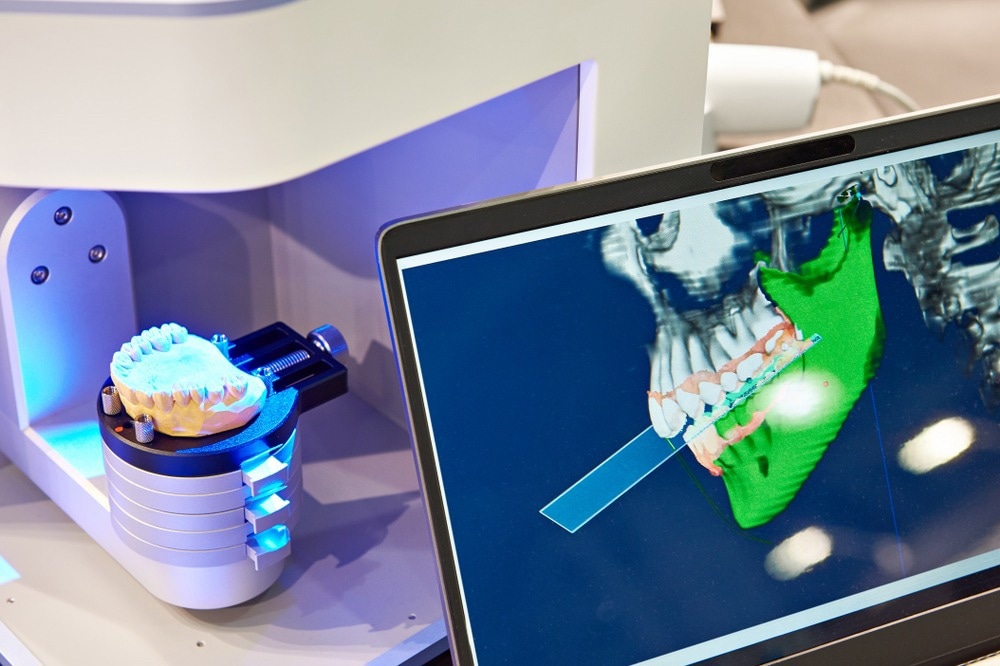
The applications of 3D imaging are vast and continue to expand across numerous sectors. In healthcare, it provides detailed anatomical visualizations for diagnosis and surgical planning, as seen in 3D and Quantitative Imaging Laboratory's work. In manufacturing and robotics, it enables automated inspection, precise guidance, and quality control. The entertainment industry utilizes 3D imaging for creating immersive virtual and augmented reality experiences, while fields like architecture, engineering, and cultural heritage conservation use it for detailed documentation and analysis. The ability to capture complex geometries and textures is vital for tasks that go beyond the capabilities of traditional 2D imaging, influencing everything from product design to historical preservation, much like the impact of Robert Gair's innovations in packaging.
🔮 Legacy & Future
The future of 3D imaging is being shaped by advancements in artificial intelligence, machine learning, and sensor technology. AI is revolutionizing how 3D data is processed, enabling faster and more accurate reconstructions, anomaly detection, and predictive analysis. The integration of 3D imaging into everyday technologies, from autonomous vehicles to advanced robotics, is becoming increasingly commonplace. As these technologies mature, they promise to unlock new possibilities in fields like personalized medicine, advanced manufacturing, and immersive digital environments, potentially blurring the lines between the physical and digital worlds, much like the philosophical discussions surrounding Simulation Theory. The ongoing development in areas like SLAM Technology further enhances the real-time capabilities of 3D imaging systems.
Key Facts
- Year
- 1990s-Present
- Origin
- Global
- Category
- technology
- Type
- technology
Frequently Asked Questions
What is the fundamental difference between 2D and 3D imaging?
2D imaging captures flat, linear views of an object, representing only height and width. 3D imaging, in contrast, captures depth in addition to height and width, providing a comprehensive, spatially rich representation of an object's shape, form, and volume.
What are the main technologies used in 3D imaging?
Key technologies include Stereo Vision, Structured Light, Time-of-Flight (ToF), Laser Triangulation, and LiDAR. Each has distinct principles for capturing depth information, making them suitable for different applications.
How is 3D imaging used in healthcare?
In healthcare, 3D imaging is crucial for creating detailed anatomical visualizations from medical scans like CT and MRI. This aids in accurate diagnosis, surgical planning, and patient treatment, offering insights that 2D imaging cannot provide.
What are some common challenges in 3D imaging?
Common challenges include dealing with reflective, transparent, or dark surfaces, handling occlusions where parts of an object are hidden, and ensuring accurate calibration. Solutions often involve advanced algorithms, multiple sensors, or controlled environments.
How is AI impacting the field of 3D imaging?
Artificial intelligence is revolutionizing 3D imaging by enhancing data processing, enabling faster and more accurate reconstructions, improving object recognition, and automating analysis. AI is key to unlocking the full potential of 3D data for complex applications.
References
- 3dqlab.stanford.edu — /what-is-3d-imaging-2/
- zebra.com — /us/en/resource-library/faq/what-are-key-3d-imaging-techniques-used-in-machine-v
- sciencedirect.com — /topics/computer-science/3d-imaging
- activesilicon.com — /news-media/news/tech-focus-3d-imaging/
- imaging.org — /IST/IST/Conferences/EI/EI_2022/Conference/C_3DMP.aspx
- va-imaging.com — /en-us/blogs/machine-vision-knowledge-center/what-is-3d-imaging
- quantificare.com — /tips/how-artificial-intelligence-is-revolutionizing-3d-imaging-technology/
- nycendodontist.com — /blog/the-benefits-of-3d-imaging